
Sector Definition
The commercial fishing sector corresponds to economic sectors 114111, “finfish fishing,” and 114112, “shellfish fishing,” in the North American Industry Classification System (NAICS, 2026).
The finfish fishing industry comprises establishments primarily engaged in the commercial capture of finfish (e.g., bluefish, salmon, trout, tuna) from their natural habitat.
The shellfish fishing industry comprises establishments primarily engaged in the commercial catching or taking of shellfish (e.g., clams, crabs, lobsters, mussels, oysters, sea urchins, shrimp) from their natural habitat.
Types of Economic Contributions
The total economic impact is the sum of direct, indirect, and induced impacts. Direct impacts reflect the economic effects within the sector where the expenditure was initially made. Indirect impacts arise from changes in the economic activity of other industrial sectors that supply goods or services to the sector under evaluation. Induced impacts result from personal consumption expenditures by industry employees.
Income, value-added, and output impacts are expressed in dollars for the year specified by the user. Output or sales is the gross sales by businesses within the economic region affected by an activity. Labor income includes personal income, such as wages and salaries, and proprietors’ income, or income from self-employment. Employment impacts are expressed in terms of a mix of both full-time and part-time jobs.
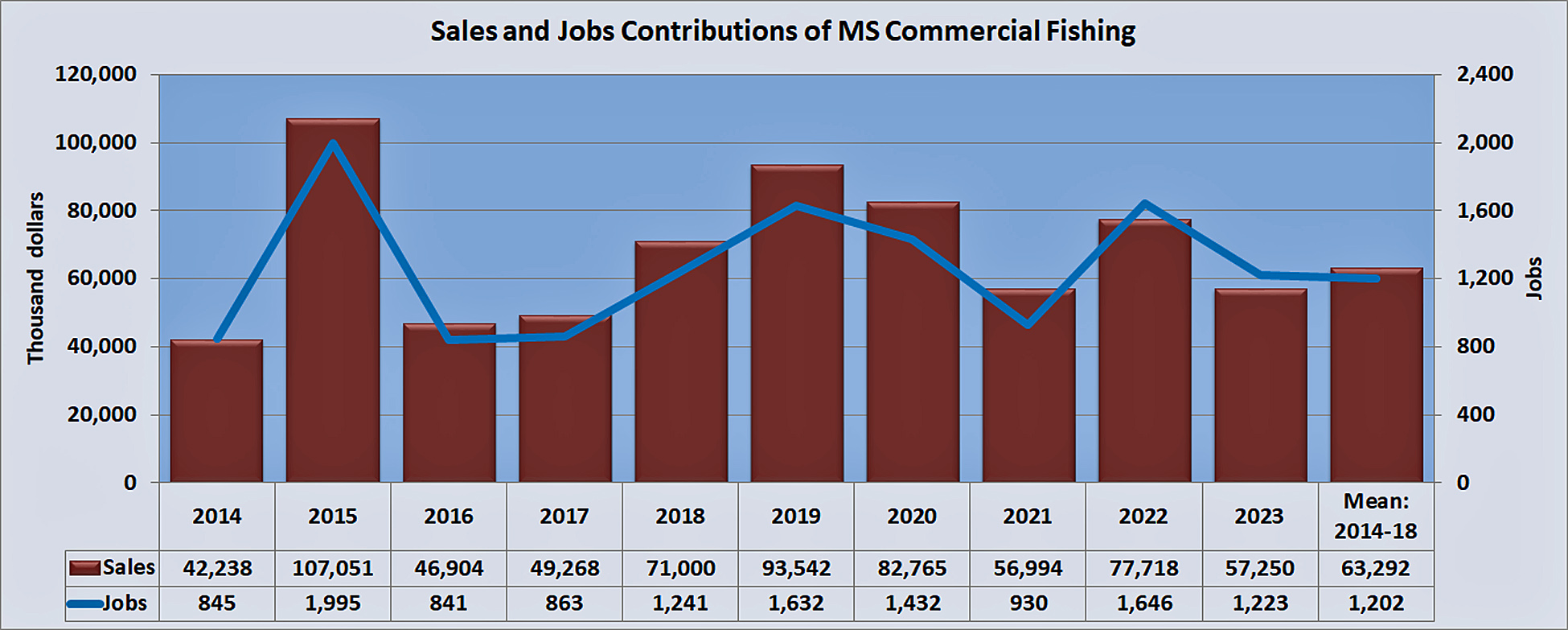
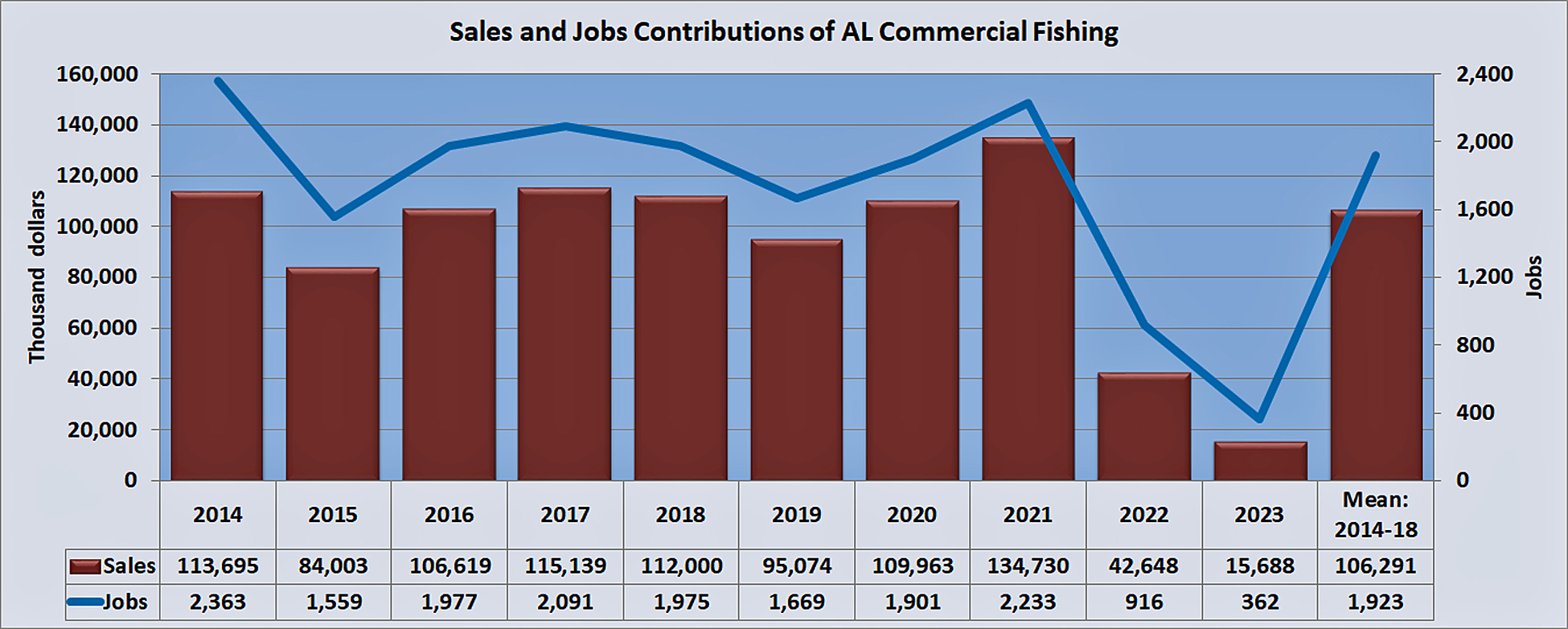
Source of raw data: NOAA Fisheries.